If you’ve ever felt caught between worlds—like a historian lost in static, a Deaf child in a hearing classroom, or, as Mark Charles describes, an Indigenous person at the edges of America’s founding fables—you’ll know the ache of exclusion from a shared story. The latest Voices of Americans episode isn’t just another podcast; it’s a wake-up call. Through brutally honest storytelling, the guests invite listeners to pull up a chair to the roots of erasure, asking: What does it mean to heal a country with no common memory? As someone from the Deaf community, I see echoes of our own fight to be heard—sometimes literally—in the struggle for recognition, dignity, and full belonging.
I. Waking Up to the Stories We’ve Forgotten (and Ignored)
In America, the idea of collective memory is often more fragile than we care to admit. The words e pluribus unum—out of many, one—are etched into our coins and echoed in our national story. But what happens when the stories that should bind us are missing, ignored, or quietly erased?
On a recent episode of Voices of Americans, the host opened with a simple, haunting question: “Hello, America. How are you?” It’s a question that lingers, especially in a time when suspicion and division threaten to unravel what little shared story we have left. The podcast’s guest, Mark Charles, a Navajo public theologian and advocate for Native American rights, challenges listeners to look honestly at whose stories have been told—and whose have been left out.
The host, recording live from Marietta, Georgia, paused to acknowledge the land’s history. Marietta, now a bustling suburb, once belonged to the Muscogee and Cherokee people. That simple act—a land acknowledgement—is becoming more common at institutions like Emory and Oglethorpe. But as research shows, these acknowledgements are only a first step. They invite us to reflect on the deeper histories that have been erased, and on the people who have been pushed to the margins.
This moment of recognition sparked a personal memory for the host. They recalled the silence in their Deaf school’s classroom, a silence that wasn’t just about sound, but about absence—a history of the Deaf community’s exclusion from mainstream narratives. The parallel is striking: just as Indigenous histories have been erased from our collective memory, so too have the stories of the Deaf community and countless others. Without these stories, we remain, as the host put it, “forever strangers in the same country.”
Mark Charles’s work, including his book Unsettling Truths, digs deep into the spiritual and legal frameworks that shape American life. He asks, “Are we really telling the truth about whose stories matter in America?” The answer, more often than not, is uncomfortable. The Doctrine of Discovery, Manifest Destiny, and even the Constitution itself have left legacies of exclusion and injustice. Studies indicate that healing and reconciliation can only begin when we are willing to confront these truths and listen to the stories we’ve ignored.
Stories have always been the heartbeat of change, and like the words etched into our currency, e pluribus unum, out of many one, we believe that by listening to each other, we can remember who we are and imagine who we might become.
It’s not easy work. Uncomfortable conversations are the first step toward healing and reconciliation. Whether it’s a land acknowledgement in Georgia or a memory of classroom silence, these moments invite us to build a more inclusive collective memory—one that honors both Native American rights and Deaf community inclusion. As Mark Charles and the host remind us, understanding begins when we dare to listen, even when the truth is hard.
II. Mark Charles – From Boarding Schools to Bridge Building
Mark Charles’s story doesn’t start with a title or a resume. It starts with a name—a name that carries four clans, four roots, four directions. “In our Navajo culture, when we introduce ourselves, we always give our four clans. We're making sure lineal as a people, and our identities come from our mother's mother.” This simple act, so ordinary in Navajo tradition, is a quiet rebellion against the Western world’s amnesia about lineage and belonging. For Mark, naming his clans isn’t just about family; it’s about memory, resilience, and refusing to let history erase who he is.
Born a dual citizen of the Navajo Nation and the United States, Mark Charles stands at the crossroads of two worlds. His mother’s mother—American, Dutch heritage, the “Wooden Shoe people.” His father’s mother—Toa Heglini, “waters that flow together.” His mother’s father and father’s father—both rooted in the Bitterwater clan, one of the original Navajo clans. Each name, each story, is a thread in a tapestry that stretches back generations, surviving despite the tides of colonization and forced assimilation.
Mark’s journey from the Navajo Nation to Washington, D.C. is more than a move; it’s a bridge between histories. He never forgets where he stands. The land beneath his feet—once home to the Piscataway people, who hunted, fished, and raised families here long before Columbus ever got lost at sea. Mark honors them, reminding listeners that these lands hold stories far older than any American history book. This practice of acknowledgment is not just courtesy. It’s Indigenous theology in action—a living recognition that healing begins with truth-telling and respect.
But Mark Charles is not just a keeper of memory. He’s a public theologian, a relentless advocate for decolonising faith and health. His work, like the acclaimed Unsettling Truths (coauthored with Soong-Chan Rah), exposes the ongoing, dehumanizing legacy of the Doctrine of Discovery—a doctrine that justified the theft of land and the erasure of Native American identity. Mark’s upcoming books, Decolonizing Faith and Decolonizing Health, dig even deeper. He asks hard questions about scripture, violence, and the Western church’s complicity in oppression. He writes in the imagined voices of his grandparents—boarding school survivors—giving agency to those who were never allowed to ask, “Why?”
The trauma of boarding schools, the silence that followed, rarely makes headlines. Yet, it shapes everything. Mark’s work is a bridge for those stories, carrying them into spaces where they can finally be heard. And he doesn’t just talk about healing—he lives it. After a hip replacement, Mark transformed his health: losing 60 pounds, reversing pre-diabetes, and banishing sleep apnea. No diets, no gym memberships—just a return to Indigenous wisdom health, asking, “How did my people live precolonization?” His journey is a testament to the power of reclaiming autonomy, not just in faith, but in body and spirit.
Research shows that naming lineage, as practiced in Navajo culture, creates resilience against historical erasure. Mark Charles’s life and work embody this principle, weaving together the threads of Native American trauma, Indigenous theology, and the hope that comes from decolonising faith and health. His story is not just his own—it’s a bridge for all who seek to remember, to heal, and to belong.
III. We the People? Unraveling the Constitution’s Exclusions
The phrase “We the People” rings out in American classrooms and courtrooms, echoing a promise of unity and belonging. But for many, those words have always sounded hollow. Mark Charles, a Navajo and American dual citizen, once stood before a crowd and told them plainly: “I’ve read our constitutions. I’ve studied our history. And I know for a fact that ‘we the people’ was never intended to mean all the people.” The applause faded, replaced by a quiet discomfort—a silence that speaks volumes about the legacy of systemic injustice in America.
From the very beginning, the U.S. Constitution was a document of exclusions. Its language, though grand, was coded. Fifty-one times, the words “he,” “him,” or “his” appear—not a single female pronoun in sight. Women were invisible in the eyes of the law. Native Americans were written out entirely, and Black people were counted as only three-fifths of a person. Article 1, Section 2 spelled out who belonged and who did not. The founding fathers’ definition of “all men” was painfully narrow, and the trauma of that exclusion lingers today.
But the roots of this exclusion run deeper than the Constitution. They reach back across the Atlantic, to a series of papal decrees known as the Doctrine of Discovery. These church edicts, issued in the fifteenth century, declared that any land not ruled by a white, European, Christian male was “empty”—its people less than human, its resources free for the taking. The doctrine was clear: “Invade, search out, capture, vanquish, and subdue all Saracens and pagans… reduce their persons to perpetual slavery.” This was the spiritual and legal foundation for colonization, conquest, and the theft of Indigenous lands.
You cannot discover lands that are already inhabited. You can conquer those lands. You can steal those lands. You can colonize those lands, but you can't discover them unless your worldview... tells you that the people already living there are not fully human.
This Doctrine of Discovery legacy shaped not only the American story but global narratives of dehumanization. It justified Columbus’s so-called “discovery” of the New World, ignoring the vibrant nations already living there. It fueled Manifest Destiny, westward expansion, and the relentless displacement of Native peoples. Even the Declaration of Independence, just thirty lines below the famous “all men are created equal,” refers to Native Americans as “merciless Indian savages.” The contradiction is staggering, and the historical trauma it caused is still felt in Native communities today.
The story of exclusion doesn’t end with race or gender. Other marginalized groups, like the Deaf community, have faced their own legal erasure. In 1880, the Milan Conference banned sign language in schools, silencing generations of Deaf Americans and stripping away their cultural identity. Their fight for recognition echoes the broader struggle against systemic injustice in America.
Research shows that these founding exclusions set a precedent for ongoing injustice. The Constitution’s gender bias and the Doctrine of Discovery’s dehumanizing worldview continue to shape politics, law, and identity. Healing from Native American trauma and other wounds of historical trauma politics requires not just remembering these truths, but facing them—together, honestly, and with the wisdom of those who were written out from the start.
IV. Spiritual Healing, Collective Memory, and the Long Journey Home
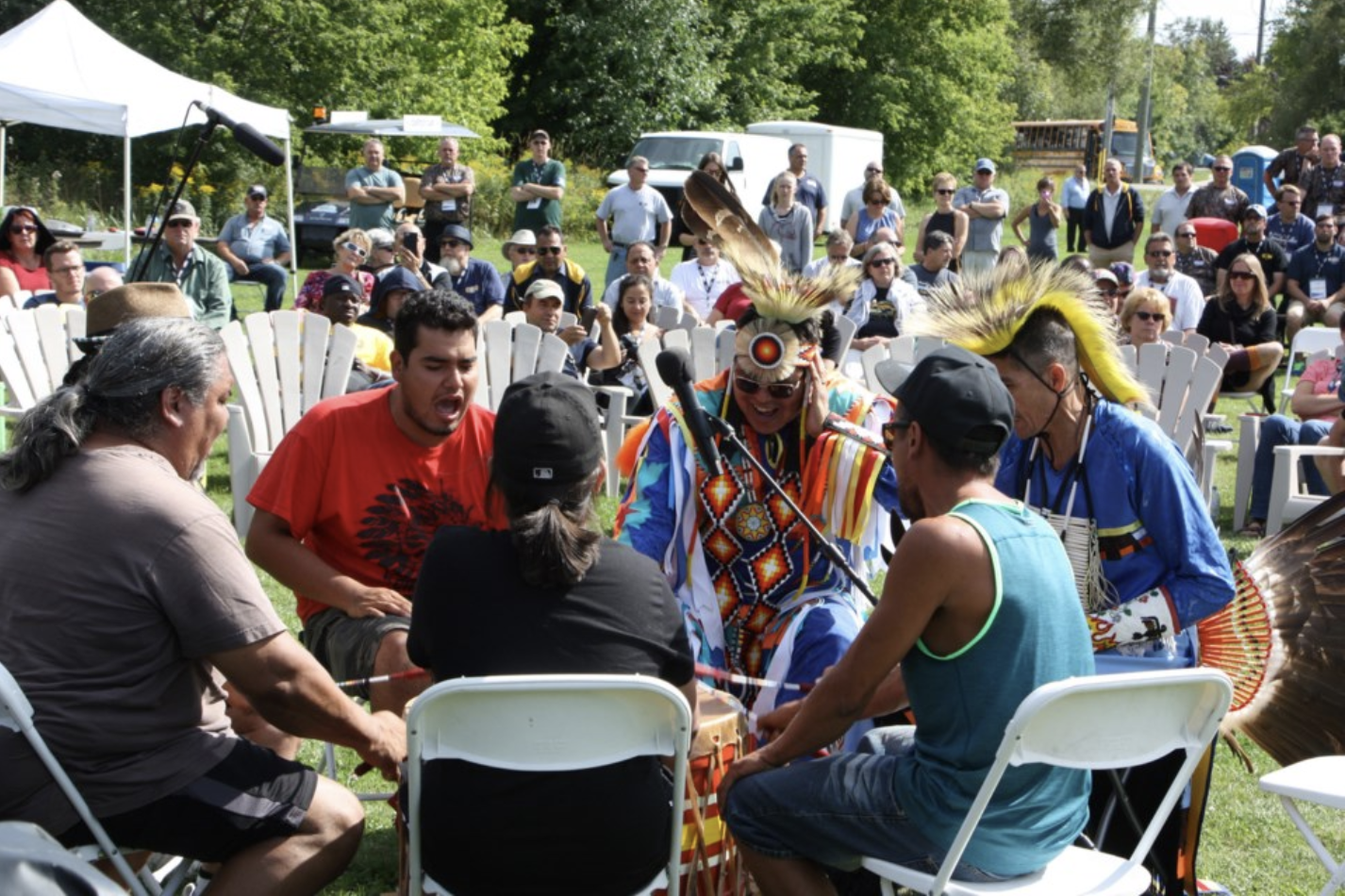
There’s a quiet power in gathering to tell the truth, especially when the wounds run deep and the memories are scattered. For many Indigenous communities, spiritual healing is not a solitary act—it’s a circle, a shared process of making memory together. The journey toward healing and reconciliation begins with facing pain honestly, in community, and refusing to let silence or denial have the last word.
Mark Charles, a Navajo thinker and writer, has spent years wrestling with these truths. His work, including the upcoming book Decolonizing Faith, asks hard questions about the stories that shape us—especially those told by faith traditions. He points out that while his earlier book, Unsettling Truths, challenged the ways churches and nations have misused scripture to justify violence and dispossession, it stopped short of questioning the scriptures themselves. Now, he’s digging deeper, asking: What happens when we look at the very roots of these narratives? Why does the image of God shift from Creator to King, and why does that shift seem to bring more violence, more exclusion, more justification for harm?
In Indigenous perspectives, spiritual healing is inseparable from truth-telling. It’s not just about recounting facts, but about making memory—a living, breathing act that brings people together. This practice is mirrored in Deaf communities as well, where circles of shared experience create space for voices that have too often been ignored. In both traditions, healing and reconciliation are communal acts, not individual journeys.
“The more I made adjustments to my health, the more I realized that my filter was how did my people live precolonization.”
This insight, shared by Charles, speaks to the heart of decolonizing faith. It’s about questioning not just the practices of American or Western churches, but also the interpretations of scripture that have been used to justify harm. Research shows that real healing from trauma—whether caused by colonial policies, racism, or systemic audism—requires honesty and the building of new narratives together. Faith, when decolonized, can break cycles of harm and offer new avenues for unity.
Imagine a podcast as a circle: each voice, each story, amplifies the others. This symbolic act of unity mirrors the Indigenous and Deaf traditions of gathering, listening, and remembering. It’s a reminder that faith communities can be either bridges or accomplices to systemic exclusion. The difference lies in whether they are willing to listen, to question, and to make space for every voice at the table.
What would true reconciliation look like if everyone—Deaf, Indigenous, or otherwise marginalized—had a voice at the table? It’s a question that lingers, unfinished, inviting us to keep listening, keep telling the truth, and keep walking the long journey home together.
V. Bringing It Home: The Personal Is Political, and Memory Is the Real Battleground
Who gets to belong? Who holds the power to define it? These questions have haunted America since its first breath, and they echo still—sometimes as a whisper, sometimes as a shout. For many, the phrase “We the People” is a promise. But for others—Native, Deaf, and other marginalized communities—it’s a riddle, a wound, a door that’s always half-closed.
On a recent episode of Voices of Americans, Mark Charles—a Navajo public theologian and advocate for Native American rights—offered a spiritual insight that cuts to the bone of reconciliation and belonging. He reminded listeners that the stories we inherit, the ones etched into our laws and our collective memory, are not neutral. They are shaped by who is allowed to speak, whose pain is acknowledged, and whose history is remembered. As Charles said, “You cannot discover lands that are already inhabited. You can conquer those lands. You can steal those lands. You can colonize those lands, but you can’t discover them unless your worldview, and better yet your church, tells you that the people already living there are not fully human.”
This is not just about the past. The trauma experienced by Native Americans—dispossession, forced assimilation, and the ongoing legacy of the Doctrine of Discovery—still shapes identity and politics today. The same is true for the Deaf community, whose language and culture were suppressed for generations. The Milan Conference of 1880, for instance, banned sign language from schools, erasing a vital part of Deaf history and identity. Research shows that such acts of collective forgetting do not merely erase stories—they fracture belonging itself.
Sometimes, missing history lessons about our own language feels a lot like being left out of “We the People.” It’s a quiet exclusion, but it runs deep. When the stories of marginalized communities are left out of the national narrative, it’s not just a loss of history—it’s a denial of full humanity. As studies indicate, marginalized groups like Deaf and Indigenous peoples share common battles for inclusion, recognition, and justice. Their struggles remind us that collective memory is not just about the past; it is the living ground on which reconciliation and belonging can be renewed.
But there is hope in small acts. Honest introductions that name our ancestors and the lands we stand on. Open circles that welcome new voices. Sharing stories that were almost forgotten. Each of these chips away at the great wall of erasure. As Mark Charles and others have shown, reconciliation is not a one-size-fits-all process:
“It means building common memory across Deaf, Indigenous, and all marginalized communities, facing hard historical truths, and listening deeply to finally envision belonging for everyone.”
So, what would your life look like if everyone’s story counted? What if reconciliation and belonging were not just political buzzwords, but daily, lived practices? The real battleground is memory, and the invitation is open: to listen, to remember, and to imagine a nation where every story matters. Maybe then, “We the People” can finally mean all of us.
TL;DR: Reconciliation is not a one-size-fits-all process: it means building common memory across Deaf, Indigenous, and all marginalized communities, facing hard historical truths, and listening deeply to finally envision belonging for everyone.
Hats off to 🖋️ Credit Information Speaker: Mark Charles Hosts: Melissa Sexton and Wilton Wallace Platform: Vimeo – Healing Our Broken Humanity series Episode Title: Where No Common Memory Exists: Finding the Point of Entry for Re-Membering Common Ground Production Credit: Hosted and produced by the World Communion of Reformed Churches (WCRC) and their interfaith partners Original Video Link: https://vimeo.com/1104658817 Note: All rights to the video are held by the original creators. This blog features the embedded video for educational and awareness purposes. Please honor the original speaker's message and integrity. Thank you for the valuable insights!


