
Let me take you back to a hot Bangkok evening, sitting nervously on a plastic chair at the Foreign Correspondents Club of Thailand. I remember my colleague's nervously adjusting his shirt collar, half-wondering if my colleague's hearing aid would pick up the soft, urgent voices echoing across the room. The atmosphere buzzed with anticipation; journalists, aid workers, and activists were gathering not just for debate, but for real stories from Myanmar—a country where everyday survival and hope have become tangled. Tonight, you’ll dive into the voices you rarely hear—whether through the bright lens of a camera, the written word, or the unspoken language of resilience. If you’re Deaf (like part of my own family) or hearing, this post is designed for you: You’ll find the embedded video (with human-reviewed captions), suggested BSL access, a full transcript link, highlighted key sections, and easy navigation for mobile. Let’s make sure no one’s left out as we uncover what “crisis” really means in Myanmar.
1. Myanmar Elections 2025: Credibility, Cynicism, and ‘Procedural Steps’
When you hear about the Myanmar elections 2025, you might wonder if this time will be different. But for most people inside Myanmar, hope has faded. Decades of election manipulation have left deep scars, and the upcoming vote is seen by many as just another act in a long, painful drama.
Lack of Trust: Lessons from the Past
Ask anyone who’s lived through Myanmar’s recent history, and you’ll hear stories of disappointment. One journalist summed it up:
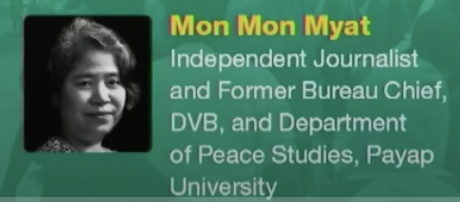
“All of these results were gone with the guns, not with the wind.” – Mommy Mat, independent journalist
People remember the 1990 election—the first time many voted, only to see the results discarded. In 2010, votes were replaced with “advanced ballots,” and the outcome was manufactured. Even in 2020, when citizens braved the pandemic to cast their ballots, the military voided the results after the coup. With each cycle, trust in the process has eroded further.
Military-Driven Elections: Legitimacy or Facade?
It’s no secret that the Myanmar military regime elections are designed to secure the military’s grip on power. The generals use elections as a tool to claim legal authority and present a civilian façade. The main party pushing for the 2025 vote is the USDP, closely linked to the military. For them, elections are less about democracy and more about maintaining control.
Some politicians and international observers still call elections the “foundation of democracy.” But for most citizens, these words ring hollow. People ask, “Why should I bother going to the polling station again?” The answer, for many, is simple: they don’t want to be fooled again.
Confusion and Chaos: By Design?
As the Myanmar political landscape 2025 shifts, confusion reigns. Even political parties aren’t sure what voting system will be used—will it be proportional representation, first-past-the-post, or something else? This uncertainty feels intentional, making it easier for the regime to control the outcome.
The government has also changed official names and declared martial law in dozens of townships, especially in resistance-controlled areas. Airstrikes and forced displacement are seen by many as ways to clear out opposition and force people into areas where they can be pressured to vote.
International Context: From West to East
In 2010, the election was seen as “Western-sponsored.” Now, many see the Myanmar elections 2025 as “China-sponsored,” reflecting the country’s shift toward authoritarian influence. As one observer put it, “We can only expect authoritarianism. No more than that.”
Voter trust is at an all-time low—personal stories echo a system-wide sentiment of betrayal.
Military’s procedural steps are about regaining legal authority, not returning power to civilians.
Confusion and fear are widespread, with many seeing the election as a tool for continued military rule, not a path to peace.
For most people in Myanmar, the 2025 elections are not a beacon of hope. Instead, they are a reminder of broken promises and a humanitarian crisis that continues to unfold.
2. Survival in the Shadow of Conflict: Daily Life, Displacement, and Humanitarian Breakdown
Living through the Myanmar conflict and displacement crisis in 2025 means facing daily uncertainty, fear, and hardship. If you are a civilian in a resistance-held area, you know that violence and instability are never far away. The threat of airstrikes and ground attacks can force you to flee at a moment’s notice, leaving behind your home, your belongings, and sometimes even your loved ones. More than 3.5 million people are now internally displaced (IDPs), living in makeshift shelters or on the move, always searching for safety.
Daily Life in Conflict Zones: Always on the Move
For many, daily life in Myanmar’s conflict zones is about survival. Access to food, clean water, and shelter is limited. You might find yourself in a crowded camp or hiding in the forest, with only basic supplies. The Myanmar humanitarian crisis has left nearly a quarter of the population—about 22 million people—needing urgent humanitarian aid in 2025. Yet, help is hard to reach you. Aid restrictions and ongoing fighting mean that even basic necessities are scarce.
Makeshift Schools and Clinics: Education and Care Under Threat
If you are a parent or a child, education is a daily struggle. Traditional schools have collapsed, so resistance forces and local communities have created makeshift and mobile schools. Teachers risk their lives to keep lessons going, sometimes teaching online or moving from place to place as attacks happen. As one teacher shared, “All the clinics, hospitals, and schools are makeshift. They need to prepare to run if there is any attack.”
Over 5,000 makeshift schools are operating in resistance areas.
Teachers often teach while on the run, resuming classes as soon as it’s safe.
Healthcare is just as precarious. With the collapse of state-run services, ethnic armed groups and alternative governance structures have stepped in. According to the National Unity Government’s 2024 report, more than 100 hospitals, 800 clinics, and nearly 200 mobile health units are running in resistance-held regions, staffed by around 5,000 health workers. These clinics and hospitals are always ready to pack up and move, reflecting the constant threat of violence.
Humanitarian Aid Restrictions and Service Gaps
Myanmar humanitarian aid restrictions make it even harder for you to get help. The military regime blocks access to many areas, especially those controlled by resistance forces. Sometimes, the regime uses violence to push people into areas it controls, possibly to influence future elections. This leaves IDPs and civilians in resistance zones with little outside support, relying on grassroots and local networks for survival.
Alternative Governance and Community Resilience
In the absence of state support, ethnic armed groups and local resistance forces have become lifelines. They organize food distribution, run mobile health clinics, and set up makeshift schools. These alternative governance structures are not perfect, but they fill critical gaps and provide hope in a collapsing system.
Mental Health and Trauma: The Hidden Crisis
The psychological toll of Myanmar civilian displacement is immense. With constant fear, loss, and instability, the demand for mental health and trauma support is frighteningly high. But with so few resources, most people must cope on their own, relying on family and community for comfort.
“All the clinics, hospitals, and schools are makeshift. They need to prepare to run if there is any attack.” – Mommy Mat
3. The Role of International Players: China’s Backing, US Funding Cuts, and Aid Blockades
China’s Support for Myanmar Military: A Game Changer
If you want to understand why Myanmar’s military regime feels more secure in 2025, you have to look at China’s support for the Myanmar military. Just a year ago, many believed the regime was on the brink of collapse. Resistance forces were gaining ground, and even rumors of an attack on Mandalay were swirling. But everything shifted when China decided to openly back the military government.
China’s influence in Myanmar politics is now unmistakable. This wasn’t just about diplomatic words—it was about real, practical help. China pressured opposition armed groups along the border to stop fighting, and it provided the military with advanced weapons and drone technology. As one analyst put it:
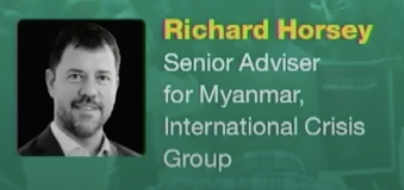
“When China came in and backed the regime, that changed a lot of regional countries’ calculations.” – Richard Horsey, Crisis Group
This move gave Myanmar’s leaders, especially Min Aung Hlaing, a new sense of confidence and more room to maneuver. Other countries in the region, seeing China’s commitment, began to rethink their own strategies. Instead of waiting for the regime to fall, they started engaging more, not out of principle, but out of pragmatic self-interest.
Diplomatic Shifts and Regional Realignment
China’s support didn’t stop at military aid. Diplomatic engagement increased, with high-profile visits to Moscow and Minsk, and a surge in regional leaders breaking the previous taboo on official contact with Myanmar’s government. After a major earthquake, even more leaders used humanitarian cover to increase diplomatic ties. This growing Chinese influence in Myanmar’s political and military landscape has shifted the entire region’s approach.
Impact of US Funding Cuts: Civil Society and Media in Crisis
While China was stepping up, the United States was stepping back. The impact of US funding cuts—especially the end of USAID and democracy support—has been devastating for Myanmar’s civil society, independent media, and humanitarian groups. These organizations relied on US funding to operate, and without it, their ability to support communities and report on the crisis has been crippled.
This retreat has left a vacuum. With less international support, local groups struggle to survive, and the regime faces less scrutiny. The international response to the Myanmar crisis is now weaker, and the people most in need are paying the price.
Myanmar Humanitarian Aid Restrictions: Blockades and Bureaucracy
The situation is made worse by Myanmar humanitarian aid restrictions. Military blockades and bureaucratic hurdles mean that even when aid is available, it often can’t reach those who need it most. International agencies report that 22 million people in Myanmar need help in 2025, but aid convoys are frequently blocked or redirected. Many organizations find it nearly impossible to operate safely or effectively.
China’s support gives the regime staying power.
US funding cuts weaken civil society and media.
Military blockades and international disengagement compound the suffering.
This new reality—where China’s backing strengthens the military, US support fades, and aid is blocked—defines Myanmar’s crisis today.

4. Documenting Crisis: Independent Journalism & Media Access Under Siege
When you look at the photos in the “Still Here” exhibition, you’re not just seeing images—you’re witnessing the courage of Myanmar’s independent journalists. Since the Myanmar coup in 2021, these reporters have faced violent crackdowns, arrests, and constant threats. Yet, they continue to document daily life, even as the military regime tries to silence them. As of 2024, about 1,500 journalists and over 60 independent media outlets still operate in Myanmar. Their work is not only brave—it’s essential for keeping the world informed about what’s really happening inside the country.
Independent journalism in Myanmar is under siege. The regime uses financial pressure, strict laws, and communication blockades to try and stop the flow of news. Many outlets have lost funding, especially as US funding cuts for Myanmar media add to the crisis. Journalists risk arrest, violence, and even death simply for doing their jobs. Despite these dangers, they persist—because they know the world needs to see and hear the truth.
The “Still Here” exhibition is a powerful reminder of this struggle. Every photo on the wall was taken by a Myanmar journalist who has survived the crackdown. These images capture the resilience, hope, and pain of people living under military rule. When you purchase a photo from this exhibition, you’re not just buying art—you’re directly supporting the journalists and media outlets who risk everything to keep the story alive. As Margarite Clary from the Crisis Group puts it:
“All proceeds go directly back to the Myanmar journalist or media outlet that contributed.”
This direct support is more important than ever. With fewer resources and growing risks, independent journalism in Myanmar is at a breaking point. The regime’s information blackout means that much of the world might never know the full extent of the crisis—unless these reporters can keep working. Their photos and stories are a lifeline, not just for those inside Myanmar, but for anyone who cares about truth and justice.
Media access in Myanmar is shrinking fast. The government’s crackdown has forced many journalists underground or into exile. Communication blockades make it even harder for news to reach the outside world. Yet, the determination of these reporters means that the crisis remains visible. The images and reports you see are the result of extraordinary bravery and commitment.
In the end, our understanding of Myanmar’s crisis depends on the work of independent journalists. Their reporting shapes how the world sees the struggle for freedom and dignity. By supporting exhibitions like “Still Here,” you help ensure that their voices—and the voices of the people of Myanmar—are not silenced. The fight for press freedom and media access in Myanmar is far from over, but as long as these journalists persist, the world will keep listening.
Hats off to the Content Creator at the International Crisis Group (with 20.9K subscribers on YouTube) for producing such insightful content! This independent organization is dedicated to preventing wars and shaping policies for a more peaceful world. Discover their valuable work here: https://youtu.be/TiyEfmTsjfg?si=BPbshlJGvljnYjra.


